
Why Detection Alone Doesn’t Predict Poultry Health Outcomes
By Jody Rush, Product Manager – Poultry
Diagnostic tools in poultry production have never been more advanced. Molecular testing, PCR, and sequencing now identify pathogens quickly and with remarkable sensitivity. As a result, most flocks will test “positive” for something at some point in the production cycle.
Yet despite this increased visibility, health and performance outcomes remain highly variable. Some flocks move through early pathogen detection with little impact, while others experience cascading losses weeks later. The difference is no longer whether a pathogen is found, but how much biological pressure it ultimately creates.
Presence vs. Pressure
Pathogens are a normal part of poultry environments. Many exist at low levels without causing measurable losses. Problems arise when pathogen populations increase, combine with other organisms, and place sustained demand on the gut and immune system.
Field surveillance data reinforces this distinction showing that downstream losses track more closely with pathogen quantity and coinfection complexity than initial detection. As pathogen loads increase, the immune system is pulled in multiple directions, leading to prolonged inflammation and incomplete recovery.
What Surveillance Data Reveals
Microbial surveillance across commercial poultry systems shows a consistent pattern: Disease risk increases as pathogen load and coinfections rise. Birds carrying multiple pathogens are not just managing more challenges; they are managing interactions that amplify damage.
PathKinex™ analyses highlight this clearly. In a multi-year evaluation of broiler flocks, birds testing positive for virulence markers associated with avian pathogenic E. coli and Salmonella, with or without Clostridium perfringens, showed a 7.4-fold higher relative risk of developing clinical disease symptoms compared to birds in which none of these markers were detected.
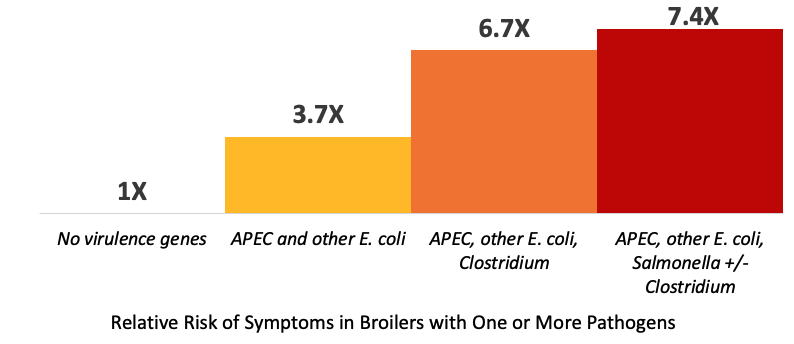
Figure 1: Representation of ceca sample data taken from 659 broilers (117 sick, 542 healthy) across 122 different farms. The data demonstrates that disease incidence heightens when multiple pathogens are present.
These findings do not suggest that a single detection predicts disease. Instead, they demonstrate how pathogen burden and combination alter biological risk. Flocks with similar early detections may experience very different outcomes depending on how far pathogens spread, interact, and build pressure within the system.
Why Load Leads to Delayed Losses
Higher pathogen presence prolongs biological stress in several ways:
- Inflammation persists, diverting energy away from growth and efficiency
- Gut integrity becomes harder to maintain
- The immune system remains activated and inflamed, reducing resilience to future stressors
These pressure-driven challenges often unfold quietly even after birds appear clinically recovered. Subsequent stressors, including heat, vaccinations, or management changes, may further strain the flock and increase the risk of downstream losses.
Rethinking How Health Risk Is Interpreted
As detection tools continue to improve, the challenge facing the industry has shifted from simply finding pathogens to interpreting what those findings mean biologically. A positive result without context can lead to overreaction or a missed opportunity.
Because of this, an effective health management strategy will focus on proactive limitation of pathogen pressures and coinfections rather than reactive responses after challenge escalation. Biological strategies that suppress pathogen growth and proliferation, interfere with pathogen communication, or reduce overall microbial pressure can help keep early detections from turning into downstream losses.
Understanding the difference between presence and pressure is becoming essential. Managing pathogen load early may be one of the most effective ways to protect performance later in the production cycle.
Learn More About Interpreting Pathogen Load in Poultry
Understanding disease risk today requires more than identifying which pathogens are present. Explore how microbial surveillance data, including pathogen quantity and coinfection patterns, can provide deeper insight into poultry health outcomes: